Cookie settings
We use necessary cookies for basic functionality, analytics cookies for visitor statistics and ad conversion tracking (Google), and functional cookies for Spotify content.



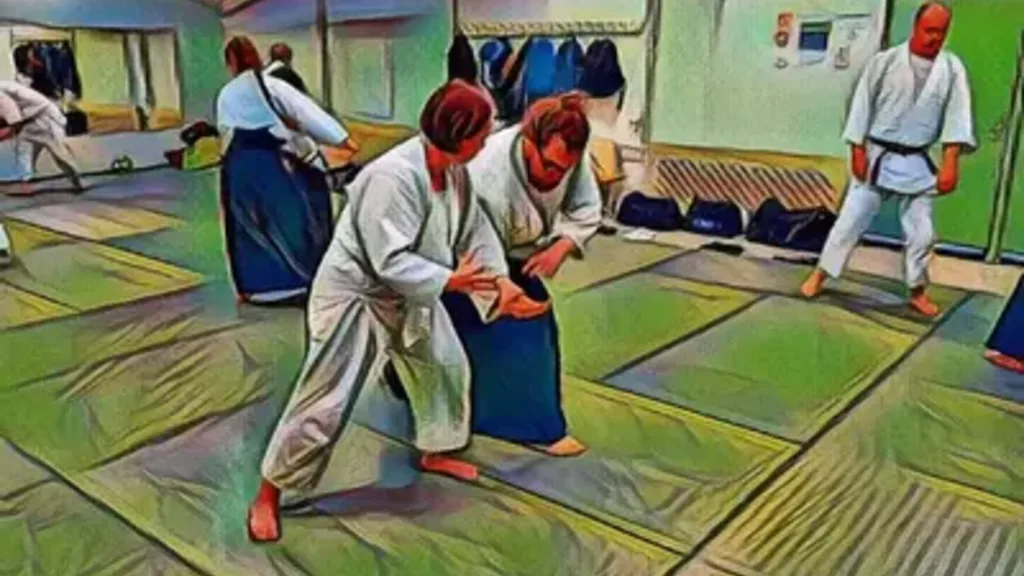
Is aikido right for a child? Short answer: yes — and often for reasons beyond “martial techniques”. In budō, children mainly learn life skills: cooperation, trust, focus and using the body in many ways. At Aikido Unlimited, juniors are central to our strategy: we aim to become Finland’s largest junior aikido club, and that means investing more attention in children than many small clubs can.
Junior groups are for roughly ages 7–12. Younger children, ages 3–7, fit family aikido, where child and adult practise together. Older youth can also start in the adults and youth group. Getting started is easy with a free trial class.
Life skills, not only techniques
The value of martial arts for a child is not how many throws or locks they can name. What matters more is what practice builds for everyday life: working in a group, waiting for your turn, listening to the instructor, and trying again when something does not work the first time. Those skills carry into school, other hobbies and friendships — often without anyone noticing.
Techniques are a means. Through them a child learns to control the body, stay present and respect both themselves and their training partner. When a parent asks “what is the benefit of aikido?”, the answer is rarely one trick — it is a whole way of being on the mat and beyond it.
Cooperation requires trust
Aikido is practised with a partner. That means a child learns cooperation in a concrete way: movement is not done against the other person, but together. Partner practice needs trust — the courage to let someone else guide the movement, and the responsibility not to hurt your friend. Confidence grows when the child notices they can handle new situations in a safe environment.
For the same tori–uke idea from an adult perspective, see The Dance of Machine and Operator. For juniors the principle is the same, with pace and playfulness suited to their age.
Body awareness as physical education
From a physical-education view, martial arts teach many ways to use the body: balance, rotation, falling, standing up, distance and timing. In aikido a child learns to move softly and in a mechanically sound way — not only “harder and faster”.
Better body awareness often helps in other sports too: football, dance, gymnastics or PE at school. When a child understands where their centre of gravity is and how arms and legs work together, learning a new movement gets easier. Safe falling — ukemi — is one of the most concrete benefits; more in the ukemi article.
Why aikido in particular?
Aikido has no competition. That changes the nature of practice: the goal is not to beat your partner, but to train together. The values we emphasise on the dojo are cooperation, discipline and concentration — not points or rankings. For many children (and parents) that is a relief: a hobby can be purposeful without the pressure to “be the best”.
Discipline does not mean fear. It means clear boundaries, rhythm and how we are in class: shoes off, a bow to the dojo, listening to the instructor. Concentration is practised in small doses — one technique, one partner, one round at a time. More on those values in Small Things Matter.
Japanese culture — we keep what is good
Aikido comes from Japan, and Japanese traditions show on the dojo: language (sensei, dojo, rei), hierarchy in belt ranks, and stories from samurai culture. We talk with students about old customs — where they come from and why they still matter in training.
We do not try to copy everything as-is. We are lucky: we can cherry-pick the good parts of the culture — respect, care for the training partner, persistence — and blend them with our own Finnish everyday life. A child gets a small window into another culture without the hobby feeling foreign or rigid.
Juniors at Aikido Unlimited
We are still a small club, but juniors are a large part of our strategy. Our aim is to build Finland’s largest junior aikido club — not for numbers alone, but so children get as much as possible: enough class times, a clear progression, a safe atmosphere and instructors’ attention.
In practice that means juniors get more focus than in many clubs where adults fill the mat and children are a side note. With us, juniors are not a side note. Junior classes are not kept strictly to aikido alone: we also mix in other martial arts, such as wrestling, so children learn different ways to use the body, balance and contact. Juniors also practise with the bokken and jo — weapons work builds distance, timing and concentration from a young age.
If you are wondering whether aikido fits your child, also read Who Is Aikido For? or see junior training. For children aged 3–7, family aikido is the right group — child and adult practise together. We are also planning groups for different needs — for example highly sensitive children for whom a regular junior class can feel too big, noisy or fast-paced.
Junior membership prices are on the pricing page. The first trial class is free — with no obligation.
Summary
- In martial arts a child mainly learns life skills, not only techniques.
- Aikido is cooperation: trust and confidence grow with a partner.
- Body control and awareness also support other sports.
- Without competition, cooperation, discipline and focus come first.
- From Japanese tradition we keep what is good and blend it with our own culture.
- At Aikido Unlimited juniors are central to the strategy — we invest in them on purpose. Classes also include wrestling as well as bokken and jo work. Younger children can join family aikido (ages 3–7); groups for different needs (e.g. highly sensitive children) are planned.
-Mikko Kurkela