Cookie settings
We use necessary cookies for basic functionality, analytics cookies for visitor statistics and ad conversion tracking (Google), and functional cookies for Spotify content.



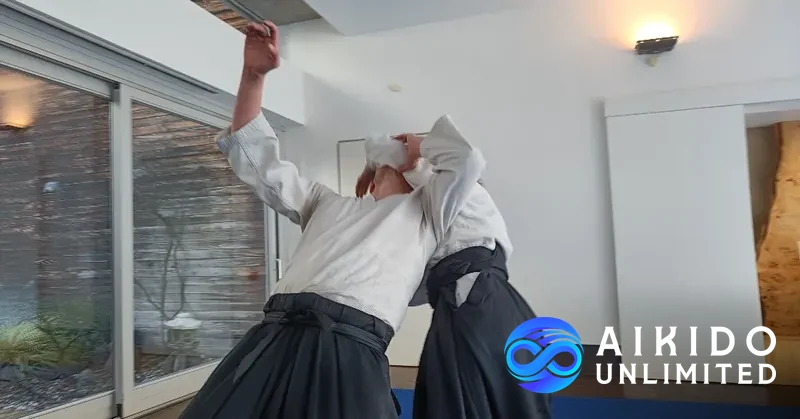
In aikido, the person who performs the technique, tori, is like a detached machine—not detached in a cold, uncaring way toward others, but in the sense that the machine feels no hatred, fear, or urge to win. It simply exists, ready to receive and shape the energy given to it. The attacker, uke, is the machine's operator. They feed the machine raw material—energy, movement, intention—and the machine turns it into art.
An experienced operator does not fear the machine. They understand its power and respect it. They know the machine is not an enemy but a tool that can create something beautiful when used well. But beauty does not reveal itself at once. It takes years of practice, interaction, and trust. The deepest core of aikido only opens when tori and uke learn to read each other—to give and receive without fear or forcing.
Tori has nothing against the attacker. They do not oppose; they accept the energy uke offers and shape it. Tori is grateful for the chance to create, to experiment, and to see what can arise from uke's movement. Out of gratitude, tori does not harm uke. They want to protect their operator—because without them there would be no energy, and without energy there would be no aikido.
Uke, in turn, wants to give tori the opportunity to create. They want to be part of the beauty that emerges when energy becomes art. The more energy uke gives, the more striking the outcome can be. But giving a lot of energy takes skill. That is why uke trains diligently. They learn to give of themselves just enough that tori can create—without getting hurt themselves.
If tori cannot trust uke's abilities, they must hold back. Tori understands uke's limits and adapts to them. Uke, in turn, understands tori's movement and stays safe while giving as much of themselves as they are able to. Without uke there is no energy. Without energy there is no aikido. Without interaction there is no aikido.
Aikido is not combat. It is a dance in a martial context, where both sides trust each other. Forcing creates conflict and breaks the sense of doing something together. Good aikido needs a good uke—and a good uke needs a good tori. Together they create something greater than either could alone. Everything rests on trust.
Aikido is a journey, not a destination. It is learning, trust, and the pursuit of beauty in every movement. It is the dance of machine and operator, in which both grow and learn from each other. And next the roles switch—it is the other's turn to use energy and create something new.
-Mikko Kurkela