Cookie settings
We use necessary cookies for basic functionality, analytics cookies for visitor statistics and ad conversion tracking (Google), and functional cookies for Spotify content.

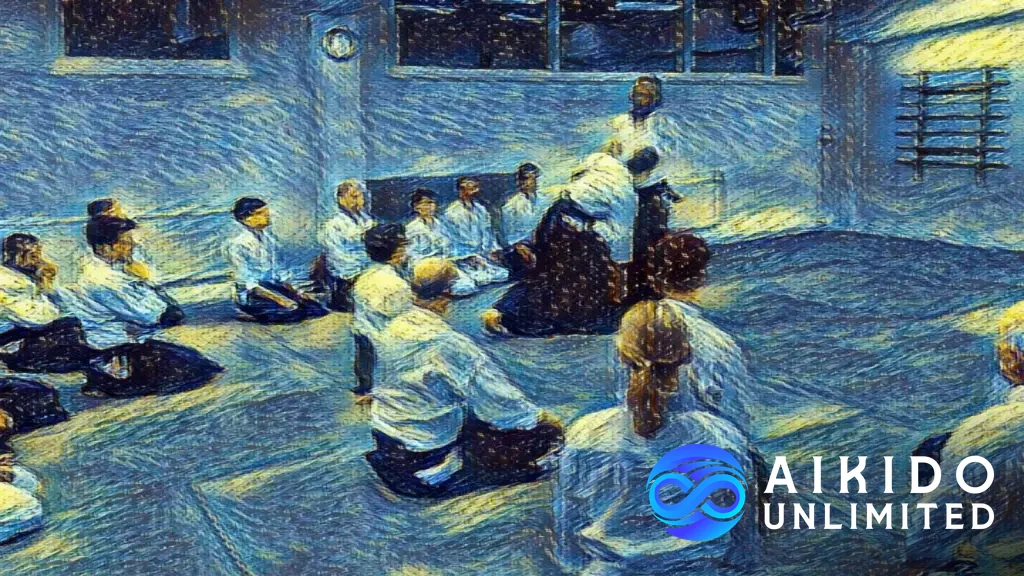
Judo is a sister art to aikido, and many aikido practitioners started in judo before finding their way to aikido. Both include throwing techniques, and judo's traditional kata in particular often resemble aikido's basic techniques.
The biggest difference is direction: judo has moved strongly toward competitive sport, while aikido has focused on budō. If you are choosing between them — or moving from judo to aikido — it helps to understand the differences in both technique and mindset.
Similarities: throws and kata
Judo and aikido use similar kinds of martial techniques. There are clear parallels in throws, and judo's traditional kata — formal practice sequences — often remind you of aikido basics.
Judo kata also include locks in an aikido-like style. The technical library is not a completely different world, even if the goal and method of practice may be.
Competition vs budō
Judo has oriented strongly toward competitive sport. Match rules, points, and winning shape much of what is trained and how.
Aikido has focused on budō: cooperating, body control, and a philosophy of peace. Competition is not mainstream, and many aikido practitioners are uneasy with the idea of competing. Among adult hobbyists the role of competition also shrinks in judo, but the culture of the art is still often built around the match.
Weapons, movement, and multiple attackers
In aikido, weapons work is strongly present and shows up in everything you do — including empty-handed practice. Aikido also assumes the possibility of multiple attackers. That is why freedom of movement matters: you need to be able to take and keep space.
In judo the focus is typically a contest with one opponent. That difference affects which solutions you practice and what kind of movement language develops.
Locks, strikes, and kicks
Aikido uses many joint locks. In judo competition those are forbidden except for locks applied to the elbow.
Strikes and kicks are also an essential part of aikido. In judo match rules they are forbidden, even though judo kata include aikido-style locks and formal exercises.
Movement language: kata, matches, and flow
Compared with judo kata, aikido's movement language is often smoother and more flowing. It resembles the movement of judo matches more than formal kata — but usually practiced at a much lighter intensity than in judo contests.
That lightness does not mean aikido is “easy”. It means practice does not usually seek the same continuous hard contact and competitive pressure as judo match training.
Newaza and techniques on the ground
An important part of judo is newaza, groundwork. Aikido does not usually have newaza in that form — it is not typically covered in aikido training.
Aikido techniques done on the ground are called suwariwaza: typically standing-combat techniques performed from the knees — not the same ground-fighting whole as in judo.
At Aikido Unlimited, however, we have also included basic ground-fighting principles in our curriculum, especially for juniors. Even though newaza is not usually part of aikido, we find these skills useful particularly for young practitioners.
Load on the body
Compared with judo, aikido is often lighter and more pleasant on the body. That comes from lighter contact and the principle of non-competition: you are not trying to beat your partner with points or force, but to train together.
Mindset: the biggest challenge when moving from judo to aikido
Even when the techniques feel similar, the mentality of the art is very different. That is often the challenge for people who move from judo to aikido.
The basis of aikido practice is a weapons-fighting mentality. It shows in how you move, how you manage distance, and how you meet a situation — even when there is no weapon in your hand.
In aikido, traditional martial practice mixes with wellness training and a philosophy of peace in its own unique way. If competition is avoided too strongly, development can slow down: every conflict starts to look like competition, and then people also avoid the situations where learning happens.
If you are a judoka trying aikido, give yourself time to adapt to the new rhythm. The technique may feel familiar — the way of being on the mat may not.
Which one is for you?
- Judo fits if you want harder physical exercise, matches, clear rules, and the structure of competitive sport — and if you also enjoy ground fighting (newaza).
- Aikido fits if you are drawn to weapons practice, a more traditional budō culture, cooperation, and lighter contact. In aikido we also value how the art looks: a technique should be martially sound, but also aesthetic. Aikido is also often gentler on the body and a safer martial art.
Read more about what aikido is, or what to expect from your first aikido class. You can also book a trial class or sign up for the basic course.
-Mikko Kurkela