Cookie settings
We use necessary cookies for basic functionality, analytics cookies for visitor statistics and ad conversion tracking (Google), and functional cookies for Spotify content.



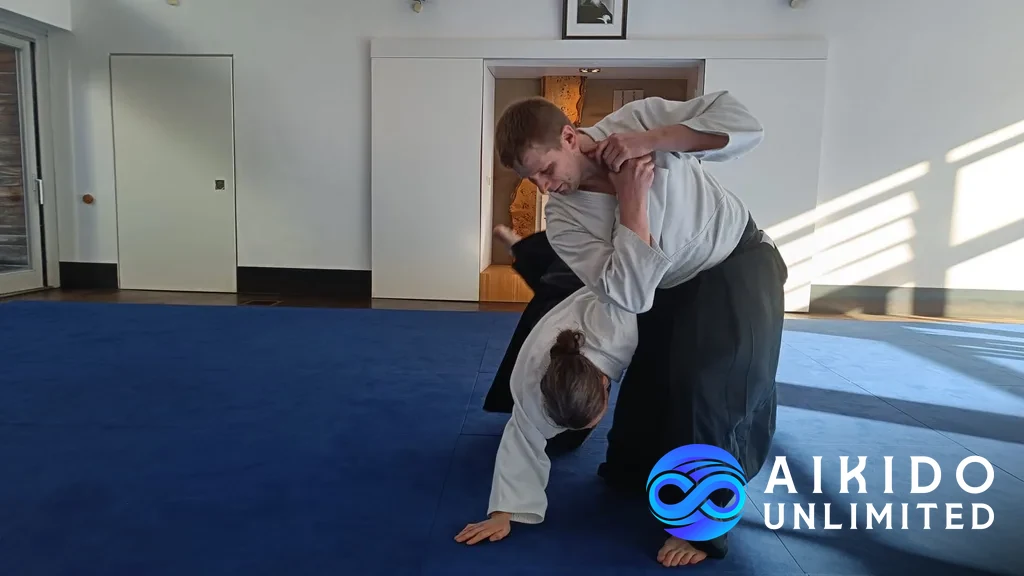
What to wear for aikido? Short answer: you can start without an aikido gi, in ordinary indoor sportswear. A proper gi makes practice more comfortable and builds a sense of belonging — it is often a mental step toward “real” training. Before buying a gi you have usually tried the art and soaked up the dojo atmosphere; once you have a gi, you clearly belong to the group.
Book a free trial class for your first visit. For a wider cost picture, see how much it costs to start aikido.
First classes: sportswear is enough
You can practise aikido in almost any training clothes. Tracksuit bottoms or other movable clothes and a good mindset are enough. You do not need your own gi until you know the art feels right.
Practice is barefoot. If you have a strong reason to wear socks, that is fine — choose socks with more grip than ordinary ones. Tabi socks are also a good option.
What is an aikido gi?
An aikido gi is a traditional martial arts uniform similar to a judo gi. Sleeves are often a little shorter than on a judo gi. The competition-style names on the back that you see in judo do not belong in aikido either.
The gi is white (apart from a few exceptions, mostly in the United States). Traditional cotton uniforms were slightly yellowish from the natural fibre colour; modern gis are bleached white.
Many aikidoka prefer a slightly thinner suit than a typical judo gi, because there is less gripping and hanging from the cloth than in judo. A thinner gi feels nicer and takes far less space in a training bag.
What to wear under the gi?
Men usually do not wear a shirt under the jacket — unless they carry a bit too much around the midsection and the jacket does not cover enough. Women wear a shirt under the jacket. It should be white or a light colour; another colour is not a serious etiquette breach, but light is the safest choice.
White aikido trousers were traditionally underwear, and separate underpants were not worn under them. Today most people do wear underpants under the aikido trousers.
Those who wear a hakama should choose slightly shorter trousers so the white pant legs do not show under the hakama. If they still show, it is not a serious etiquette mistake — but a shorter cut looks neater.
Where to buy a gi — and what it costs
From the Aikido Unlimited webshop you can get quality Tozando beginner gis. The smallest junior sizes start around €46.40; the largest sizes are about €84. A white belt is included.
- Tozando basic aikido gi (jacket + trousers + white belt)
- Thinner option: Tozando Ryo jacket and Ryo trousers
Hakama — when, and which colour?
More experienced practitioners wear a hakama, a traditional Japanese garment. The colour is usually black or dark blue. Tozando also makes brown and olive green, but those are rare in everyday practice — an unusual colour will draw looks. A few well-known teachers use or used a white hakama; those are exceptions too.
Hakama is often started after the 3rd kyu exam, typically after about two years of training. The Tozando basic hakama we sell (Tetron AH250) costs €89.
At Aikido Unlimited instructors do not usually wear a hakama — partly for safety, and partly to show footwork clearly. For grading exams we always put on a hakama, to give the occasion the honour it deserves. On seminars and when guests visit the dojo it is still good manners to wear a hakama if you have earned the right to a black belt. Grades 3rd–1st kyu may optionally wear a brown belt; that is not very common.
Embroidery and logos
Gear usually has no flashy logos. You can embroider your name: on the jacket typically on the sleeve slightly below the shoulder; on the hakama often on the back right, just below the back plate. Some people also embroider a black belt. A common combination is the aikido kanji plus your name. Embroidery can be ordered from our webshop.
Wooden weapons: bokken, jo and tanto
Other equipment includes wooden weapons: bokken, jo and tanto. At your own club you can often use club weapons. People usually buy their own when they want to practise at home or attend seminars at other clubs.
- Bokken (Hokkaido oak): about €60
- Jo (Hokkaido oak): about €65
- Tanto (Hokkaido oak): about €35
You can spend a lot on wooden weapons if you want — Tozando also makes custom swords costing over €1,500. Beginners do not need to think about those.
Summary: what you need when
- First classes: indoor sportswear, bare feet (or grip socks / tabi)
- Once you continue: aikido gi (+ white belt)
- Around 3rd kyu: hakama (if that is your club’s custom)
- Later / seminars: your own weapons as needed
Ready to try? Book a free trial or see start aikido — adults. Membership prices are on the pricing page.
-Mikko Kurkela