Cookie settings
We use necessary cookies for basic functionality, analytics cookies for visitor statistics and ad conversion tracking (Google), and functional cookies for Spotify content.

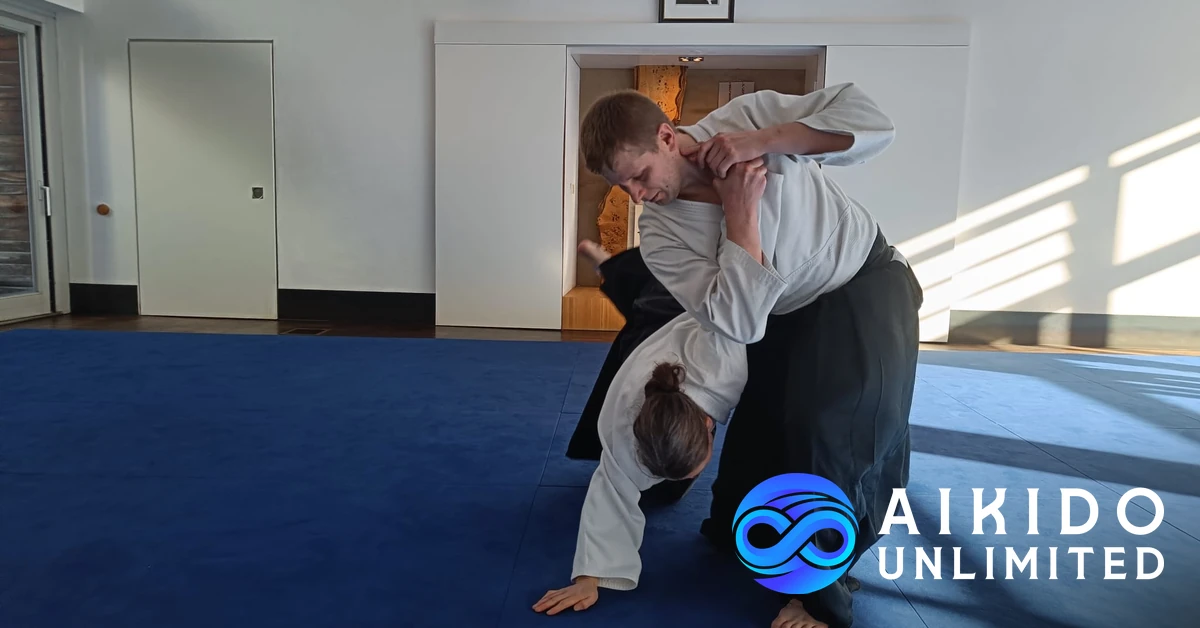
“Is aikido self-defense?” is a question people often ask. The short answer is: no — it is much more. In aikido we practice martial principles through various martial techniques. These could be useful in self-defense situations. The training, however, does not aim at developing self-defense skills, but at understanding oneself.
A martial art for ordinary people
In aikido we practice various martial skills. Some of these skills are easy to apply in violent situations; others are harder. In aikido the old cliché “the journey matters more than the destination” fits well. It does not matter who is the toughest (or the softest), but whether you are a good training partner. Aikido is a martial art for ordinary people who do not want to hurt others, but want to learn by doing things together.
A good aikido technique
To me, a good aikido technique is martially sound, free of aggression, using the attacker's energy, and beautiful. It is not necessarily the most efficient or easiest way to handle a situation. I believe aesthetics also matter in aikido. Upright postures and mechanically clean movement bring elegance. Clothing, the training environment, atmosphere, and the training setup are part of the whole as well.
Beauty needs conflict
The beauty of aikido needs the conflict that uke brings. Without that conflict, the technique is lifeless and flat. The question is: how does the person performing the technique restore harmony without losing themselves? Aikido techniques are often very subtle and layered. A skilled uke reads the small movements of the person doing the technique, and vice versa. From the outside, not much may seem to happen — yet the parties to the conflict are in a continuous conversation. The one who reads the situation more sensitively succeeds in turning it to their advantage.
Training within your own limits
And can you practice martial skill without ever having to test it under hard pressure? I see no problem with that: martial practice follows your own boundaries. Developing skill does, however, require new and more demanding stimuli. In aikido those newer, harder stimuli are not necessarily harder, more aggressive, or more dangerous situations. They can be ever more precise and sensitive perceptions — precision in how you use the body, better mental control, or a deeper knowing of yourself. That does not rule out seeking a harder and more violent stimulus either, if that is the practitioner's thing.
As a teacher
As an aikido teacher, I feel I need to understand the basics of martial reality and self-defense, and offer answers — or at least directions — when students have questions, even if my own focus is elsewhere. A student's interest does not always match my own core expertise. Then I hope I can guide them forward on their own path, offer what I can give along the way, and hope they find a teacher who matches their interest.
-Mikko Kurkela