Cookie settings
We use necessary cookies for basic functionality, analytics cookies for visitor statistics and ad conversion tracking (Google), and functional cookies for Spotify content.



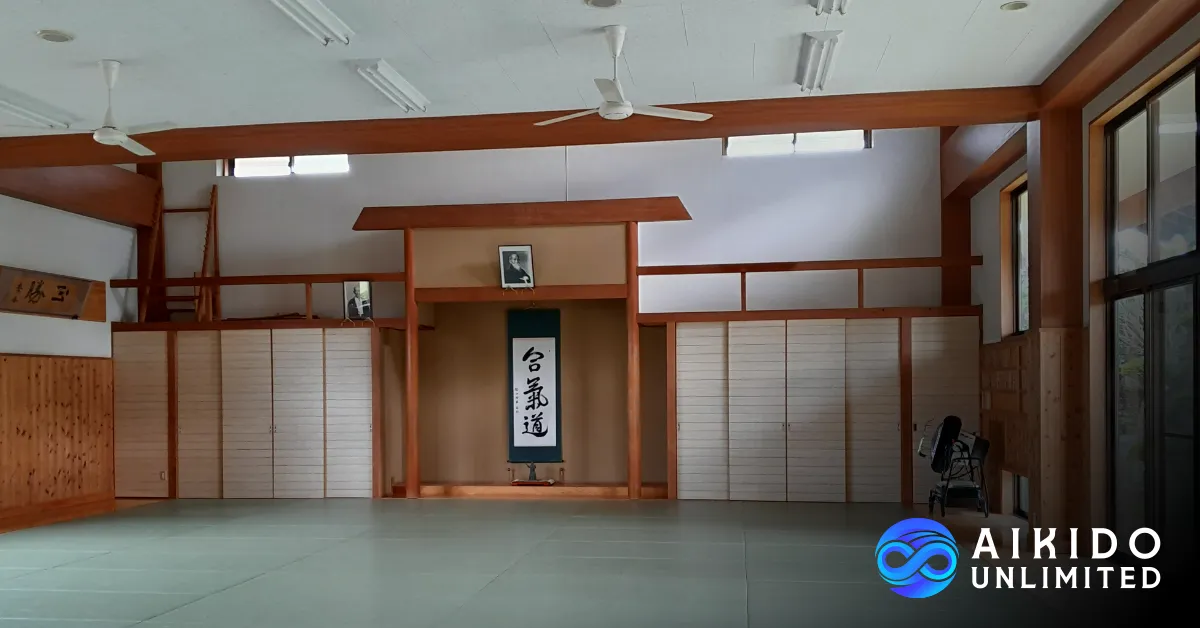
What exactly is needed – concretely speaking, let's forget money, paperwork, abandoning family life and other obvious things – to create neat, comfortable and functional training spaces in an old industrial building?
The Vision
First, you need a vision: What kind of dojo would I want to train at (well, for someone who's really hooked, a training partner and any space with a marginally padded floor and heating is all a plus)?
A spacious tatami, sufficient ceiling height for weapon techniques. Bright, clean, accessible. A space where you can sit and chat after training, maybe with a coffee maker – or what if there was a café nearby where you could grab a cup of coffee or a cold drink? Sounds pretty good 🙂
Back to Cold Realism
First we had to find a space – good enough location, costs within acceptable limits, space adaptable to our needs. We found a property in Hervanta that fits the specs, so let's start planning the renovation.
A bare warehouse hall is actually quite ideal for starting a dojo: The space is clear, ceiling height is at least sufficient, and the premises are at street level, enabling barrier-free access for those using mobility aids.
Renovation Requirements
But the journey from dusty warehouse hall to bright dojo is quite long. It requires, among other things:
- Betolux primer 38 liters
- Betolux 35 liters
- Wall primer about 30 liters
- Latex paint 85 liters
- Work hours about 160, or over 4 full work weeks
Now we just need to fit those work hours into the calendar alongside training, aikido camps, possible personal life – and paid work, and this will turn out great!
Practical Lessons Along the Way
When looking for a space, write the spec list out before the first viewing: ceiling height for some weapon work, enough floor area for tatami, street-level entry, water points, and a way to separate changing rooms. Location matters as much as square metres — if the dojo is hard to reach by bus or car, the hall stays empty even if the paint dried beautifully. Choosing Hervanta was a compromise: enough space, manageable costs, and a place we could actually reshape.
In renovation, order matters. Floor before walls, primer before topcoat, and a realistic sense of how many evenings you can actually paint after training and work. The lists of litres and hours are not a joke — they force you to admit that a dojo is not a weekend project. At the same time they make the work visible: every litre and hour is a step toward a space where people can train safely.
Another lesson is prioritisation. Not everything needs to be finished before the first class, but safety and cleanliness are non-negotiable: the floor, ventilation, lighting, and a way to wash your feet. The café and the final trim can wait — training partners cannot.
Community Forms Before Opening Night
You do not found a dojo alone, even if the papers and keys are in two names. Before the first public class you need people who believe in the idea enough to carry paint, measure tatami, or simply ask how it is going. That group is the club’s core later too: they know what the floor is made of and why the coffee pot matters.
When the space starts to look like a dojo, the community widens to those who come to train — not to renovate. That is why the vision must include what happens after class: a place to talk, belong, and ask for advice. A bright tatami is necessary, but a dojo lives because people return. In later parts we will return to how the renovation progresses and when the doors open.
This is only the first part. The point is to document the founding so that later we remember why we chose this hall — and so someone else can learn from our mistakes without having to count litres and work hours from zero. A dojo is built by work, not by the idea alone.
-Sarita